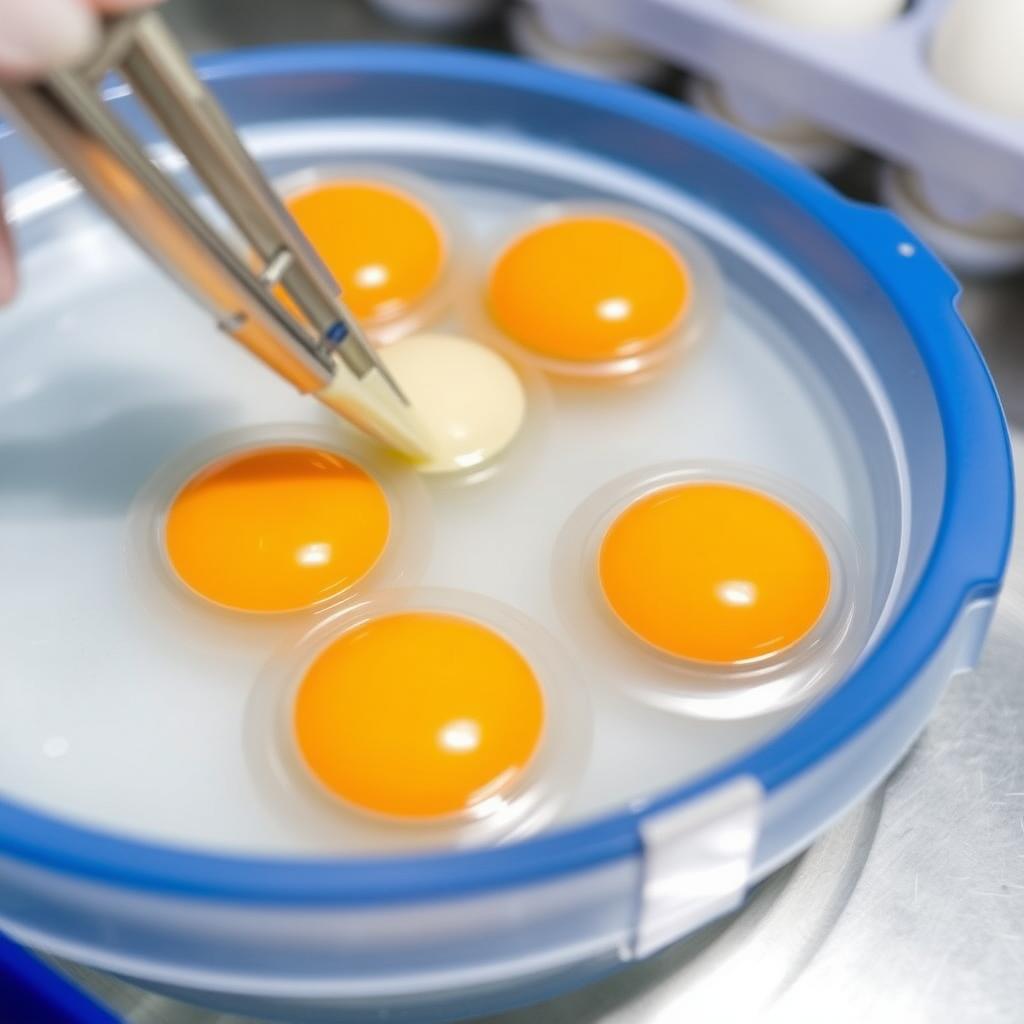
Understanding Success Rates of Egg Freezing Procedures
July 25, 2025, 5:22 p.m.
Egg freezing has become a popular option for women who want to preserve their fertility for the future. Whether it's due to career goals, health concerns, or simply not being ready to start a family, many women are turning to this technology. But what are the success rates of egg freezing procedures, and what factors influence them? Let's dive into the details.
Egg freezing is a process where a woman's eggs are extracted, frozen, and stored for later use. When she's ready to try for a pregnancy, the eggs are thawed, fertilized with sperm, and implanted into the uterus through in vitro fertilization (IVF). This method is often used for fertility preservation, especially for women facing medical treatments like chemotherapy that could affect their fertility, or for those who want to delay childbearing for personal reasons.
The success rates of egg freezing procedures can vary widely, but recent studies provide some encouraging data. According to the American Society for Reproductive Medicine (ASRM), the survival rate of eggs after thawing is around 90-97%, with fertilization rates between 71-79%. However, the most important metric is the live birth rate, which is the percentage of procedures that result in a healthy baby.
For women under 35 who freeze their eggs, the live birth rate per embryo transfer can be as high as 50-60%. This rate decreases with age, dropping to about 20-30% for women over 40. The number of eggs frozen also plays a crucial role. Women who freeze 10-15 eggs have a better chance of success compared to those who freeze fewer.
Several factors can influence the success rates of egg freezing procedures:
- Age: The younger a woman is when she freezes her eggs, the higher the success rate. Eggs from younger women are generally healthier and more likely to result in a successful pregnancy.
- Number of Eggs Frozen: Freezing more eggs increases the chances of having viable embryos for transfer. Experts recommend freezing at least 10-15 eggs for a good chance of success.
- Method of Freezing: The method used to freeze the eggs can also impact success rates. Vitrification, a fast-freezing technique, has higher survival rates compared to older slow-freezing methods.
- Health and Lifestyle: A woman's overall health, including factors like smoking, weight, and underlying medical conditions, can affect the quality of her eggs and, consequently, the success of the procedure.
While statistics are helpful, real-life stories can provide a more personal perspective. Take, for example, Sarah, a 32-year-old marketing executive who decided to freeze her eggs after a breakup. She froze 12 eggs and, two years later, used them to conceive her daughter. "It was a relief to know I had options," she says. "The process was straightforward, and I'm so glad I did it."
On the other hand, Lisa, who froze her eggs at 39, had a different experience. She froze 8 eggs but struggled to get a viable embryo. "I wish I had done it earlier," she admits. "But even though it didn't work out for me, I don't regret trying."
Understanding the egg freezing process can help demystify it. Here's a step-by-step overview:
- Consultation: The journey begins with a consultation with a fertility specialist. They will assess your ovarian reserve and discuss your goals.
- Ovarian Stimulation: You'll take hormone injections for about 10-12 days to stimulate your ovaries to produce multiple eggs.
- Monitoring: During this period, you'll have regular ultrasounds and blood tests to monitor your progress.
- Egg Retrieval: Once the eggs are mature, they are retrieved in a minor surgical procedure under sedation.
- Freezing: The eggs are then frozen using vitrification and stored in liquid nitrogen tanks.
The entire process takes about two weeks, and most women can resume normal activities within a day or two after the retrieval.
Egg freezing can be expensive, with costs ranging from $10,000 to $15,000 per cycle, not including storage fees. Some insurance plans may cover part of the cost, especially if there's a medical reason for the procedure. It's also worth noting that you might need more than one cycle to freeze enough eggs, which can increase the total cost.
Before deciding to freeze your eggs, consider the following: - Your Age: The younger you are, the better the chances of success. - Your Fertility Goals: Think about how many children you might want and whether you might need multiple cycles. - Financial Implications: Make sure you understand the costs involved and whether your insurance will cover any part of it. - Emotional Readiness: The process can be emotionally taxing, so it's important to have support.
Advancements in technology are making egg freezing more effective. New techniques like preimplantation genetic testing (PGT) can help select the healthiest embryos, increasing the chances of a successful pregnancy. Additionally, research into ovarian tissue freezing and other fertility preservation methods is ongoing, offering hope for even better success rates in the future.
Egg freezing is a valuable option for women who want to preserve their fertility. While success rates vary based on age, the number of eggs frozen, and other factors, the procedure offers a way to take control of your reproductive future. If you're considering egg freezing, consult with a fertility specialist to understand your options and what you can expect.