Understanding the Success Rates of Ovarian Tissue Freezing for Fertility Preservation
Aug. 31, 2025, 5:22 p.m.
Overview
Ovarian tissue freezing, also known as ovarian tissue cryopreservation, is a cutting-edge option for women who want to preserve their fertility. This method is especially vital for those facing medical treatments like chemotherapy, which can cause infertility. But how effective is it? In this article, we’ll dive into the success rates of ovarian tissue freezing, explore its benefits and challenges, and share insights from recent studies to help you understand if it’s the right choice for you.
What Is Ovarian Tissue Freezing?
Ovarian tissue freezing involves surgically removing a portion of the ovary, typically the outer layer where eggs are stored, and freezing it for future use. When a woman is ready to conceive, the tissue can be thawed and transplanted back into her body. This procedure is a lifeline for women and girls who can’t delay treatment for egg retrieval, like those with cancer or undergoing gender-affirming surgery. Unlike egg freezing, which takes weeks, ovarian tissue freezing can be done quickly, making it a game-changer for urgent cases.
The process begins with a minimally invasive surgery called laparoscopy. Doctors remove part or all of one ovary, dissect the egg-rich cortex, and freeze it using a slow-freezing technique or, less commonly, vitrification. The tissue is stored in liquid nitrogen until the patient is ready to use it. Once reimplanted, the tissue can restore ovarian function, producing hormones and potentially allowing natural conception or in vitro fertilization (IVF).
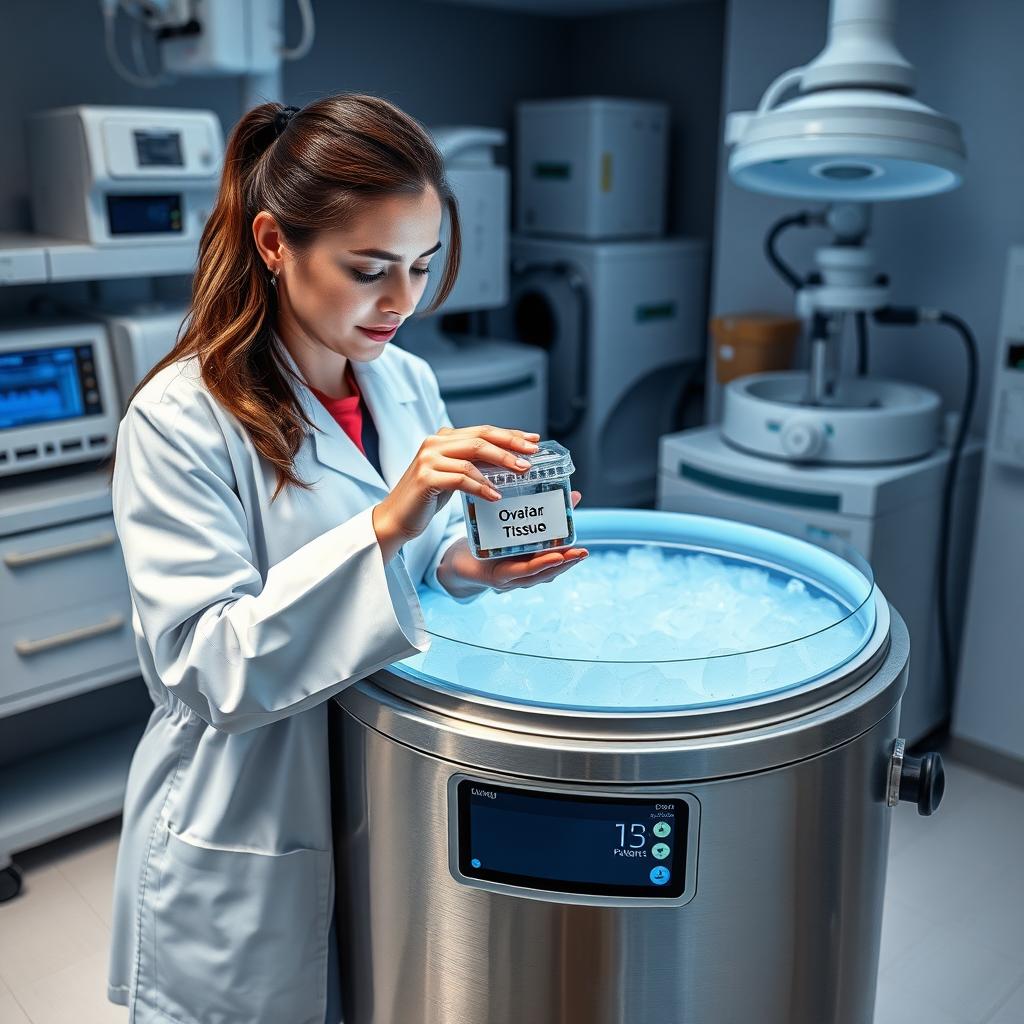
Success Rates of Ovarian Tissue Freezing
The success rates of ovarian tissue freezing vary, but recent studies provide encouraging data. According to a 2017 study published in Reproductive Sciences, about 40% of women who underwent ovarian tissue freezing and transplantation achieved pregnancy. Out of 309 procedures analyzed, 84 resulted in live births, with two-thirds of these pregnancies occurring naturally and one-third through IVF. This suggests a significant chance of success, especially for younger women with healthier ovarian tissue.
A 2020 study from the National Cancer Institute in Lithuania further supports these findings. It reported an 80% engraftment success rate for frozen-thawed ovarian tissue in experimental settings, meaning the tissue successfully reattached and functioned after transplantation. While these numbers are promising, success depends on factors like the patient’s age, the quality of the ovarian tissue, and the type of cancer treatment received.
For women under 35, the fertility preservation success rates are higher because younger eggs are typically healthier. For example, a 2023 report from Johns Hopkins Medicine noted that women who freeze their tissue before age 40 have a greater likelihood of pregnancy compared to older women, as egg quality declines significantly after age 37. However, only about 25% of procedures overall result in a live birth, according to a 2015 PubMed review, highlighting the need for realistic expectations.
Factors Affecting Success Rates
Several factors influence the success rates of ovarian tissue freezing: - Age at Freezing: Younger women, especially those under 35, have better outcomes due to higher egg quality and quantity. - Type of Treatment: Chemotherapy and radiation can damage ovarian tissue before freezing, reducing success rates. - Tissue Quality: The number of viable eggs in the frozen tissue affects outcomes. - Transplantation Technique: Proper reimplantation is critical to restoring ovarian function. - Health Conditions: Conditions like endometriosis or autoimmune diseases can complicate the process.
For prepubescent girls, ovarian tissue freezing is often the only option, as they can’t undergo egg retrieval. A 2021 study in the Journal of Pediatric Surgery found that ovarian tissue from girls aged 6–17 retained high follicle density, suggesting strong potential for future fertility. However, only one recorded case of a live birth from tissue frozen before puberty exists, indicating more research is needed.

Benefits of Ovarian Tissue Freezing
Ovarian tissue freezing offers unique advantages: - Speed: Unlike egg freezing, which requires weeks of hormonal stimulation, this procedure can be done immediately. - Hormone Restoration: Reimplanted tissue can restore natural hormone production, easing menopausal symptoms. - Versatility: It’s suitable for prepubescent girls and women who can’t delay treatment. - Potential for Natural Conception: Many women conceive without IVF, reducing costs and complexity.
I spoke with a friend who underwent this procedure before starting chemotherapy for breast cancer. She described the relief of knowing her fertility was protected, even as she faced a daunting treatment journey. Years later, after remission, her reimplanted tissue allowed her to conceive naturally—a moment she called ‘nothing short of a miracle.’ Stories like hers highlight the emotional and practical value of fertility preservation.
Challenges and Risks
Despite its promise, ovarian tissue freezing isn’t without challenges. One major concern is the risk of reintroducing cancer cells during transplantation, especially for patients with blood-related cancers like leukemia. A 2020 study emphasized the need for rigorous testing, such as molecular analysis, to ensure the tissue is free of malignant cells before reimplantation.
Another challenge is follicle loss. Up to 90% of follicles may not survive transplantation due to ischemia (lack of blood flow) before the tissue fully integrates. Researchers are exploring solutions, like using biocompatible scaffolds to improve graft survival, as noted in a 2020 ScienceDirect article. Additionally, the procedure is still considered experimental by some, and insurance coverage can be limited, making cost a barrier for many.
Who Should Consider Ovarian Tissue Freezing?
This procedure is ideal for: - Young women or girls facing cancer treatments that threaten fertility. - Women with autoimmune or genetic conditions that may lead to premature ovarian insufficiency. - Those undergoing gender-affirming surgery who wish to preserve fertility. - Women who can’t undergo egg freezing due to time constraints or medical reasons.
If you’re considering this option, talk to a reproductive endocrinologist. They can assess your ovarian reserve using tests like anti-Müllerian hormone (AMH) levels and guide you through the process. Johns Hopkins Fertility Center offers comprehensive consultations to help you make informed decisions.

The Future of Ovarian Tissue Freezing
The field is evolving rapidly. Researchers are exploring in vitro maturation, where eggs are matured in a lab without reimplantation, potentially reducing cancer risks. Artificial ovaries, using scaffolds to support follicle growth, are also on the horizon, as discussed in a 2021 PubMed review. These advancements could boost fertility preservation success rates and make the procedure more accessible.
For now, ovarian tissue freezing offers hope to many facing infertility. It’s not a guarantee, but it’s a powerful tool. As someone who’s seen friends navigate fertility challenges, I believe the peace of mind it provides is invaluable. Knowing you’ve taken steps to protect your future family can make all the difference during tough times.
Summary
Ovarian tissue freezing is a promising fertility preservation method, with success rates of ovarian tissue freezing ranging from 25-40% for live births, depending on age and health. While challenges like follicle loss and cancer risks remain, ongoing research is improving outcomes. If you’re facing treatments that threaten fertility, this option could be a beacon of hope. Consult a specialist to explore whether it’s right for you.