Egg Freezing: What You Need to Know
March 30, 2026, 6:39 a.m.
Egg Freezing: What You Need to Know. More women than ever are choosing to freeze their eggs to take control of their fertility timeline. Whether you are building a career, waiting for the right partner, or facing medical treatments, this option gives you flexibility without closing the door on biological children later.
In this comprehensive guide, you will discover the full process, realistic success rates, costs, and risks. You will also learn practical steps like managing stress and making simple lifestyle changes that can boost your overall fertility. We will cover modern fertility treatments explained and the latest advanced fertility preservation techniques available today.
Think of egg freezing as pressing pause on your biological clock. Eggs frozen in your 20s or early 30s stay young and healthy, even as you age. Many women I have spoken with describe it as empowering—giving them peace of mind while they focus on life goals.

The egg freezing process starts with a consultation. Your doctor reviews your medical history, runs blood tests, and performs an ultrasound to check your ovarian reserve. This helps predict how many eggs you might produce in one cycle.
Next comes ovarian stimulation. You inject hormone medications for about 10 to 14 days to encourage multiple eggs to mature. Frequent monitoring with blood tests and ultrasounds keeps everything safe and on track.
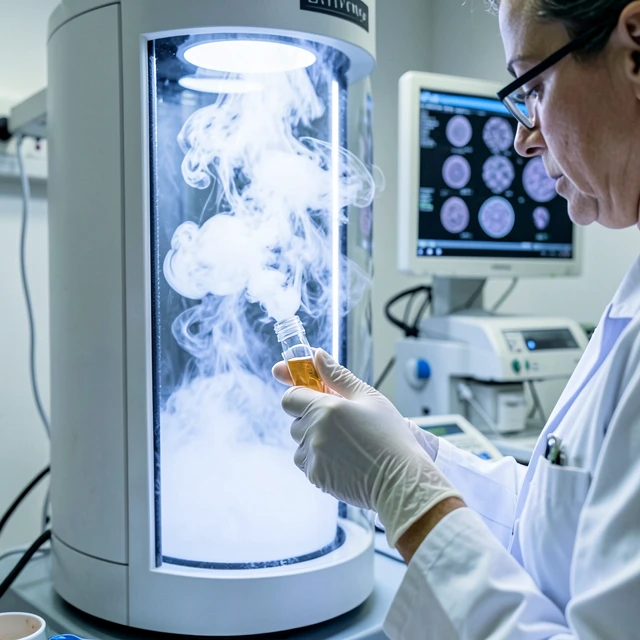
The retrieval happens under light sedation in a quick 20-minute procedure. A thin needle gently collects the eggs through your vaginal wall—no incisions needed. In the lab, specialists use vitrification, an advanced freezing method that turns eggs into glass-like solids at minus 196 degrees Celsius. This preserves them perfectly for years.
Later, when you are ready, the eggs thaw and fertilize through IVF. Embryos then transfer to your uterus. The whole journey usually takes less than a month from start to finish.
Success depends heavily on your age when you freeze. Women under 35 often need about 9 to 15 eggs for a 70 percent chance of a live birth later. Recent 2026 data shows overall live birth rates from frozen eggs hover around 39 to 51 percent, jumping higher for younger freezers.
Freezing after 37 still works but requires more eggs because quality declines. That is why experts recommend acting sooner if family building is not immediate.
Costs vary by location but expect $10,000 to $20,000 per cycle in the United States, including medications and monitoring. Annual storage runs $500 to $1,000. Some clinics now offer fixed-cost packages or financing to make it more accessible.
Risks remain low. The most common side effect is mild bloating from hormones. Serious issues like ovarian hyperstimulation syndrome affect fewer than 5 percent of cases. Infection or bleeding from retrieval is rare. Egg freezing does not guarantee pregnancy, but it gives you options.
How Stress Affects Fertility and What to Do About It
Chronic stress raises cortisol levels that can disrupt ovulation, shorten your luteal phase, and lower egg quality. Studies show women under high stress before conception have lower live birth rates, especially during treatments.
The good news? Managing stress works. Simple daily practices like meditation, yoga, or short walks cut anxiety and may improve hormone balance. Many women report better cycles and higher treatment success after learning stress-reduction techniques.
Talk to a counselor or join a support group. Evidence from mind-body programs shows they lower distress and boost pregnancy rates. Prioritize sleep and hobbies—your fertility benefits when you feel calmer.

Lifestyle Changes to Improve Fertility
Small daily habits make a big difference. Maintain a healthy weight—both underweight and obesity can disrupt ovulation. Aim for a BMI between 18.5 and 24.9 through balanced eating and movement.
Follow a Mediterranean-style diet rich in leafy greens, whole grains, healthy fats like olive oil and avocados, and lean proteins. Cut back on processed foods, trans fats, and excess sugar. Studies link this pattern to better fertility outcomes.
Stop smoking and limit alcohol completely when trying to conceive. Keep caffeine under 200 milligrams daily—about one or two cups of coffee. Take 400 to 1,000 micrograms of folic acid daily starting three months before any pregnancy attempt.
Exercise moderately 30 to 45 minutes most days. Avoid extreme workouts that stop your periods. These changes not only support natural conception but also improve results if you later use frozen eggs or other modern fertility treatments explained below.
Here is a quick checklist:
- Eat plenty of fruits, vegetables, and omega-3s
- Maintain consistent moderate exercise
- Quit smoking and limit alcohol
- Manage stress daily
- Take prenatal vitamins early
Modern Fertility Treatments Explained
Egg freezing fits into a broader world of assisted reproduction. Once ready, you combine thawed eggs with sperm through in vitro fertilization (IVF). Specialists use intracytoplasmic sperm injection (ICSI) for precise fertilization when needed.
IVF involves growing embryos in the lab for a few days before transferring the healthiest one. Preimplantation genetic testing can screen for chromosomal issues, raising success odds. These tools make family building possible even after years of waiting.
Other options include embryo freezing if you have a partner now, or donor eggs and sperm when needed. Clinics tailor plans to your unique situation, blending advanced fertility preservation techniques with compassionate care.
Advanced Fertility Preservation Techniques
Beyond standard egg freezing, new methods expand choices. In vitro maturation (IVM) retrieves immature eggs with minimal hormones and matures them in the lab—ideal for some cancer patients or those sensitive to stimulation.
Ovarian tissue freezing lets doctors remove and cryopreserve a slice of ovary for later re-implantation. For pelvic radiation cases, uterine transposition moves the uterus temporarily out of the radiation field to protect it.
Vitrification itself is an advanced technique that improved dramatically in the last decade, giving frozen eggs survival rates over 90 percent after thawing. These innovations make fertility preservation safer and more effective than ever.
Every journey is personal. One patient I followed froze eggs at 32 before starting cancer treatment. Years later she used them successfully and now has a healthy toddler. Stories like hers remind us that preparation today opens doors tomorrow.
In summary, egg freezing offers a proven way to preserve your options. Combine it with stress management, smart lifestyle changes, and awareness of modern fertility treatments explained here for the best results. Talk to a reproductive specialist soon to see if it fits your life.
Knowledge is power. Start your conversation today and take charge of your reproductive future.