Emotional Support for Fertility Preservation - Resolve: The National Infertility Association
April 6, 2026, 6:34 a.m.
Emotional Support for Fertility Preservation - Resolve: The National Infertility Association
Navigating a cancer diagnosis or infertility diagnosis while dreaming of a family can feel isolating and overwhelming. Many people worry not just about treatment but about losing the chance to have biological children. That is where emotional support makes all the difference. Resolve: The National Infertility Association offers free, compassionate resources to help you feel seen, supported, and empowered. In this guide, you will explore the benefits of fertility preservation for cancer patients, walk through the sperm banking process step by step, and discover practical ways Resolve helps real people rebuild hope.

Fertility preservation is not just a medical step. It is an emotional lifeline. When cancer treatments like chemotherapy or radiation threaten your ability to have children later, freezing sperm, eggs, or embryos gives you options. Studies show that people who preserve their fertility report less regret and better mental health years after treatment. Yet the process can stir up fear, sadness, and stress. That is why pairing medical choices with emotional support changes everything.
Resolve: The National Infertility Association stands out as a trusted nonprofit that has helped thousands since 1974. They run free peer-led and professionally led support groups focused on infertility, fertility treatments, and family building after cancer. Their groups help people share stories, learn coping skills, and feel less alone. One participant said after six sessions, she finally felt equipped to face the uncertainty ahead. You do not have to go through this journey in silence.
The Benefits of Fertility Preservation for Cancer Patients
Cancer survival rates keep improving, which means more people of reproductive age finish treatment and want to start or grow their families. Fertility preservation offers clear benefits that go far beyond biology.
First, it protects your future choices. Treatments that save your life can damage sperm production or ovarian function. Banking sperm before treatment means you can still pursue biological parenthood later through IVF or other methods.
Second, it reduces emotional distress. Knowing you took action to protect your dreams lowers anxiety during active cancer care. Many survivors say the peace of mind alone was worth it.
Third, it improves long-term quality of life. Research from organizations like the American Society for Reproductive Medicine shows that people who preserved fertility feel more in control and experience less decisional regret.
Resolve helps you weigh these benefits through their support groups and educational resources. They also advocate for insurance coverage so more people can afford these steps. Their work ensures emotional support and practical help go hand in hand.

Sperm Banking Process: Your Step-by-Step Guide
If you are a man facing cancer treatment, sperm banking is often the fastest and most effective way to preserve fertility. The sperm banking process step by step is straightforward, private, and designed to fit around your medical schedule. Here is what typically happens:
-
Talk with your doctor early. Before starting chemotherapy or radiation, ask about fertility risks and get a referral to a sperm bank or reproductive urologist. Timing matters—do this as soon as possible.
-
Complete quick health screening. You will have a blood test to rule out infectious diseases. This keeps the stored samples safe.
-
Provide your sample. Most men collect semen by masturbation in a private room at the clinic. Some banks allow you to collect at home and deliver the sample within an hour if kept at body temperature. Avoid lubricants or saliva—they can harm sperm.
-
Lab analysis. Technicians check sperm count, how well they swim (motility), and their shape (morphology). They divide the sample into small vials.
-
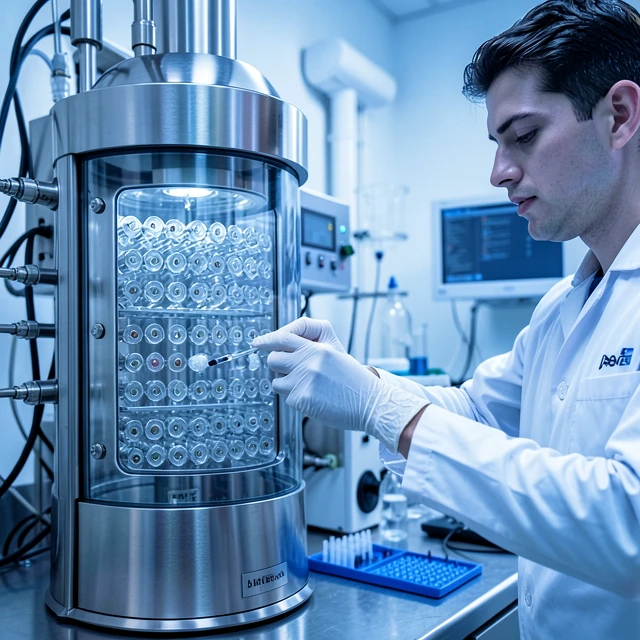
Freezing and storage. Each vial gets a special freezing solution, then it is slowly cooled and stored in liquid nitrogen tanks at minus 196 degrees Celsius. Samples can stay viable for decades.
-
Follow-up. You can bank multiple samples over a few days for better odds later. The bank gives you paperwork and storage options.
The entire sperm banking process usually takes just a few visits and can be completed in under a week. Costs vary, but many hospitals and Resolve resources help you explore financial aid or insurance coverage. Resolve support groups often include men who have been through sperm banking—they share tips on making the experience less stressful.
Real stories bring these steps to life. One man in his late 20s, newly diagnosed with lymphoma, felt terrified about his future family. Through a Resolve virtual support group, he connected with other guys who had banked sperm before chemo. Their honest talk gave him the courage to schedule the appointment. Two years later, cancer-free, he used his stored samples and now has a healthy toddler. Stories like his show that sperm banking is not just a medical procedure—it is a step toward hope.
How Resolve Delivers Emotional Support Every Step of the Way
Resolve: The National Infertility Association does not stop at information. They create real community. Their free support groups meet in person and online. You can join a fertility treatment support group that specifically addresses the stress of procedures like sperm banking or egg freezing. Groups for men, for cancer survivors, and for couples help you process emotions without judgment.
In these safe spaces, you learn practical tools: breathing exercises to calm treatment-day nerves, ways to talk with family about your choices, and strategies to handle the financial side of fertility preservation. Resolve also runs advocacy campaigns to expand insurance coverage for fertility preservation services, especially for cancer patients. Their website at resolve.org lists local groups, helplines, and financial resources.
Many members say the emotional support they receive from Resolve feels like a second family. It turns a scary medical decision into a hopeful plan. Whether you are exploring sperm banking or simply need someone who understands the fear of infertility after cancer, Resolve connects you with people who have walked the same path.
Taking action is easier when you know you are not alone. Start by visiting resolve.org and searching for a support group near you or online. Reach out to their helpline at (888) 623-0744 for personalized guidance. Talk with your oncologist about fertility preservation right away—do not wait. And remember, every step you take, whether banking sperm or joining a group, shows strength and love for the family you hope to build.
Wrapping Up: Hope and Support Are Within Reach
Fertility preservation combined with emotional support gives you the best chance to move forward with confidence. The Benefits of Fertility Preservation for Cancer Patients go beyond science—they touch your heart and future dreams. By following the sperm banking process step by step and leaning on Emotional Support for Fertility Preservation - Resolve: The National Infertility Association, you turn uncertainty into a plan filled with possibility. Resolve stands ready with free groups, education, and advocacy to walk beside you. You deserve to feel supported every step of the way. Reach out today and take that first hopeful step toward the family you envision.