The Role of Artificial Intelligence in Reproductive Medicine: Revolutionizing Fertility Care
May 13, 2026, 6:30 a.m.
Overview
Artificial intelligence is changing lives by helping more people build families. In reproductive medicine, AI analyzes complex data, predicts outcomes, and supports doctors in making better decisions. From initial consultations to embryo selection, these tools bring precision and hope to fertility journeys. This article explores the exciting developments making treatments more effective and accessible.
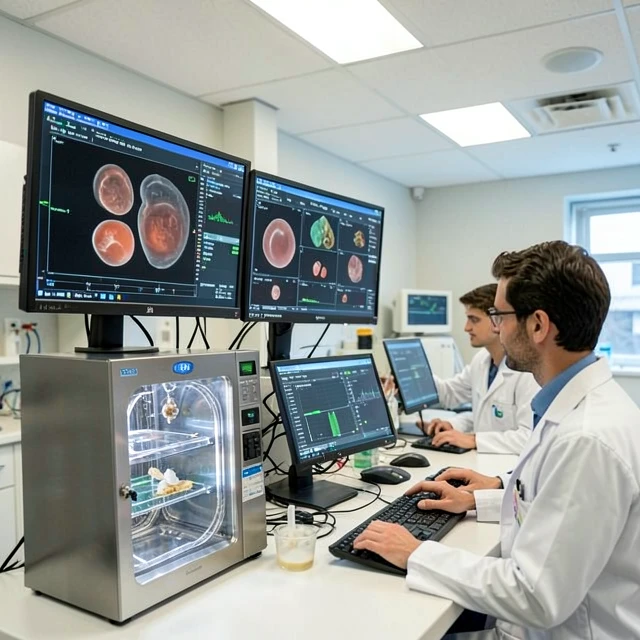
Couples and individuals facing fertility challenges often feel overwhelmed by uncertainty. The good news is that AI is stepping in as a powerful ally. By processing vast amounts of patient data quickly and accurately, AI helps tailor treatments to each person's unique needs. This shift toward personalized care marks a new chapter in reproductive health.
How AI Supports Early Diagnosis and Planning
Doctors traditionally rely on hormone tests, ultrasounds, and medical history to understand fertility issues. AI enhances this process by spotting patterns in data that humans might miss. For example, machine learning models can predict ovarian response to stimulation drugs based on age, hormone levels, and previous cycles.
One study from reputable sources shows AI can improve the accuracy of these predictions, leading to better dosing and fewer complications. Learn more about AI applications in ovarian stimulation from NIH research.
Patients benefit from shorter wait times for diagnoses and more realistic expectations about treatment success. AI does not replace doctors but gives them sharper tools to guide conversations and plans.

Advancements in AI for Fertility Treatments
The integration of AI has accelerated progress across every stage of assisted reproductive technology. In sperm and egg selection, algorithms evaluate thousands of images to identify the healthiest candidates. This objectivity reduces human bias and improves fertilization rates.
During ovarian stimulation, AI systems recommend personalized hormone protocols. They consider real-time follicle growth data from automated ultrasound analysis. Clinics using these tools report more balanced responses and higher numbers of quality eggs.
Embryo development monitoring has also improved dramatically. Time-lapse imaging combined with AI tracks subtle changes in cell division. The system flags embryos with the highest potential for successful implantation without constant manual checks.
Automated Systems in Modern Fertility Clinics
Fertility clinics handle complex workflows with many manual steps. Automated systems powered by AI are changing this reality. Robots and smart software now manage routine tasks like dish preparation, media changes, and data logging.
These innovations free embryologists to focus on high-level decisions. They also reduce errors and standardize care across different clinics. Some fully automated platforms can even perform intracytoplasmic sperm injection (ICSI) with remarkable precision under remote supervision.
The result is higher efficiency, lower costs over time, and more consistent outcomes for patients. Clinics adopting these technologies often see improved patient satisfaction due to smoother processes.

Latest Advancements in Embryo Cryopreservation Technology
Embryo cryopreservation has become safer and more reliable thanks to vitrification techniques and AI support. Artificial intelligence helps predict which embryos will survive freezing and thawing best. It analyzes morphology, growth patterns, and genetic indicators before storage.
This technology gives patients more flexibility. They can freeze embryos for future use, pursue additional treatments, or plan pregnancies when life circumstances are ideal. AI-driven selection means higher success rates after thawing, bringing peace of mind to those preserving fertility for medical or personal reasons.
Researchers continue to refine these methods. Combining AI with improved cryopreservation protocols is helping more families achieve healthy pregnancies even after delays.
Personal Insights from the Field
Having followed developments in reproductive medicine closely, I am struck by how AI addresses emotional aspects of fertility treatment. The uncertainty of 'Will this cycle work?' creates tremendous stress. AI models that predict live birth chances based on comprehensive data help set realistic expectations and reduce repeated disappointments.
One powerful example is non-invasive embryo assessment. Instead of relying solely on appearance, AI evaluates dynamic development patterns. This leads to better single embryo transfers and lower risks of multiple pregnancies.
Challenges and Ethical Considerations
While promising, AI in reproductive medicine needs careful implementation. Data privacy is crucial when handling sensitive health information. Algorithms must be trained on diverse populations to avoid bias.
Regulatory bodies and medical professionals are working together to ensure safety and transparency. Patients should ask clinics about the validation of any AI tools they use.
Cost remains another factor. However, as adoption grows and automation increases efficiency, treatments may become more affordable and accessible to a wider range of people.
The Future Looks Bright
AI will continue evolving alongside other technologies like genomics and robotics. We can expect more precise matchmaking of gametes, real-time treatment adjustments, and even better cryopreservation outcomes.
The ultimate goal is simple: help more people experience the joy of parenthood with fewer barriers and greater confidence.
Summary
The role of artificial intelligence in reproductive medicine is expanding rapidly. Through advancements in AI for fertility treatments, smarter automated systems in modern fertility clinics, and latest advancements in embryo cryopreservation technology, patients receive more personalized and effective care. While challenges exist, the benefits in accuracy, efficiency, and outcomes are transforming this field for the better.