Understanding IVF Success Rates: What Every Couple Needs to Know
May 12, 2026, 6:32 a.m.
Understanding IVF Success Rates: A Complete Guide for Hopeful Parents
If you're exploring fertility treatments, Understanding IVF Success Rates is one of the most important steps. In vitro fertilization (IVF) offers real hope to millions dealing with infertility, but numbers can feel confusing at first. This guide breaks everything down simply so you can make informed decisions with confidence.

What Are IVF Success Rates Really Telling Us?
IVF success is most often measured by the live birth rate—the percentage of cycles resulting in the birth of a baby. National data from reputable sources shows these rates vary widely based on several key factors.
According to the Centers for Disease Control and Prevention (CDC), U.S. fertility clinics report detailed outcomes each year. Success isn't one-size-fits-all. A fertility doctor specializing in IVF will always personalize expectations rather than quoting national averages alone.
Recent CDC data indicates that for women using their own eggs, success depends heavily on age at egg retrieval. Younger women generally see higher rates because egg quality and quantity are better. However, advances in technology mean even older patients have good options today.
IVF Success Rates by Age: The Most Important Factor
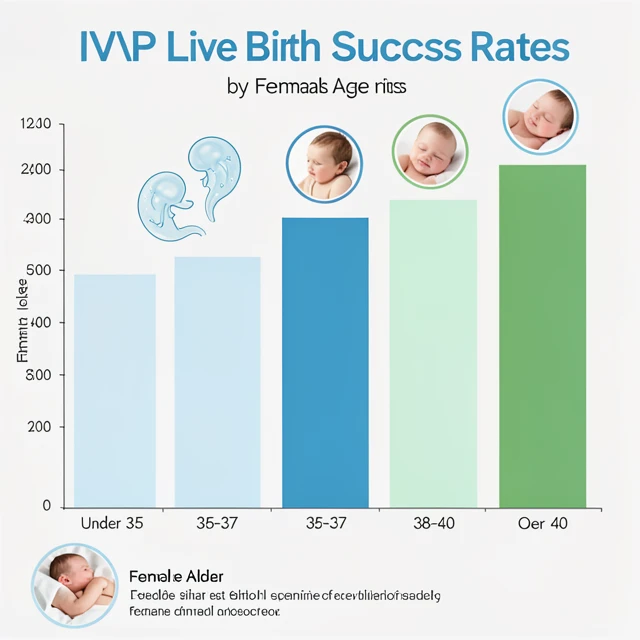
Age remains the strongest predictor of IVF success. Here's a breakdown based on national statistics:
- Under 35: Live birth rates per egg retrieval often reach 45-55%.
- 35-37: Success typically ranges from 35-45%.
- 38-40: Rates drop to around 25-35%.
- Over 40: Success with own eggs falls further, often below 15%, though donor eggs can dramatically improve outcomes.
These figures come from aggregated clinic data and represent averages. Your personal journey may differ based on health and treatment choices.
Many people feel surprised by how quickly success chances change after 35. This is mainly due to declining egg quality. A skilled fertility doctor can run tests like AMH levels and antral follicle counts to give you a clearer picture of your ovarian reserve.
Other Key Factors That Influence Success
While age matters most, several controllable and medical factors play big roles:
Lifestyle Choices
- Maintain a healthy BMI (18.5-24.9)
- Quit smoking and limit alcohol
- Reduce stress through exercise, meditation, or counseling
- Eat a nutrient-rich diet with antioxidants
Medical Factors
- Cause of infertility (male factor, tubal issues, endometriosis, etc.)
- Previous pregnancies or IVF attempts
- Uterine health and endometrial lining quality
- Sperm quality and genetics
Clinics with experienced embryologists often achieve better outcomes through advanced techniques like time-lapse imaging and preimplantation genetic testing (PGT).
One couple I spoke with shared how switching to a fertility clinic focused on individualized protocols boosted their success after two failed cycles elsewhere. The new fertility doctor specializing in IVF identified subtle immune factors and adjusted the treatment plan accordingly.

How Many Cycles Might You Need?
Most people don't succeed on the first try. Cumulative success rates improve with multiple cycles:
- Many achieve pregnancy within 2-3 cycles.
- Success can reach 50-70% or higher after several attempts for younger patients.
Frozen embryo transfers often have strong success rates because they allow the body to recover from stimulation and let doctors time the transfer perfectly for the uterus.
Realistic planning helps manage emotional and financial stress. Many fertility clinic teams now offer packages or financing to support multiple cycles when needed.
Choosing the Right Fertility Clinic and Doctor
Success rates vary between clinics. When researching:
- Check verified national data from CDC and SART.
- Look beyond raw numbers—consider patient volume and your specific diagnosis.
- Ask about lab quality, success with cases like yours, and add-on technologies.
- Meet the fertility doctor specializing in IVF to ensure you feel supported.
A high-volume center isn't always best. Some smaller clinics excel with personalized care for complex infertility cases.
Actionable Tips to Maximize Your IVF Success
- Get a thorough preconception checkup.
- Optimize sperm and egg health months in advance.
- Follow your protocol exactly.
- Consider evidence-based add-ons only after discussion with your doctor.
- Build a strong support network—emotional health matters.
Remember, IVF technology continues to improve. What was considered average a decade ago is much better today.
Understanding the Emotional Side of IVF
The journey involves more than statistics. Hope mixed with uncertainty is normal. Many patients describe it as a rollercoaster. Working with a compassionate fertility doctor and clinic team makes a huge difference. Support groups and counseling can help you stay resilient.
One patient shared: 'Understanding IVF success rates helped us set realistic goals while keeping hope alive. Our third cycle brought our miracle baby.'
Summary: Knowledge Empowers Your Journey
Understanding IVF Success Rates gives you power. While national averages provide context, your personal success depends on individual factors, clinic expertise, and perseverance. Consult an experienced fertility specialist early to create a tailored plan. With the right information and care, many overcome infertility challenges successfully.
Every story is unique. Focus on what you can control and partner with experts who truly listen.